



A buyer in Dubai who wants a quote for office furniture does not write an email. They open WhatsApp, send two lines and a photo, and expect a reply before the end of the morning. Another buyer, shortlisting payroll software from a desk in Manchester, may never open a search results page. They ask an AI assistant which vendors suit a restaurant group and read a short answer that names three companies. Both enquiries are real, and neither passes through the channels most marketing plans are built around.
Search and social take most of the attention because they are large and measurable, and for many companies they deserve it. But the map has more on it. Some channels are regional habits that English-language advice overlooks, and WhatsApp is the largest of these. Some are new surfaces still taking shape, which is where advertising inside AI assistants sits. And some are small, old and unfashionable: directories, forums, newsletters, podcasts, trade bodies. Each carries a workable number of enquiries for the right business and close to none for the wrong one, so the useful question is which ones fit yours.
Running across all of them is a separate question: what the current generation of AI tools should be allowed to do in a lead generation operation. The answer has two halves, and companies that get the split wrong pay for it either in wasted hours or in a damaged sending domain.
This article covers four things: how to run WhatsApp as a lead channel without losing the records it produces, what is real and what is only announced in advertising on AI assistants, ten smaller channels with the type of business each one suits, and where AI helps in lead generation and where it does not. It is one section of the studio’s wider guide to the end-to-end lead generation process, which covers the stages before and after channel choice.
Being named in an AI assistant’s answer is not something a company buys. It is something its pages qualify for.
In this article
WhatsApp as a lead channel
WhatsApp is a working lead channel in India, the Middle East, Latin America and South East Asia, and most English-language marketing advice ignores it. In those markets a buyer who wants to talk to a supplier opens WhatsApp before they open email, including for business purchases. If your buyers are in those regions, the question is not whether to take enquiries on WhatsApp but how to run the channel without losing the records it produces.
The app and the platform are different products
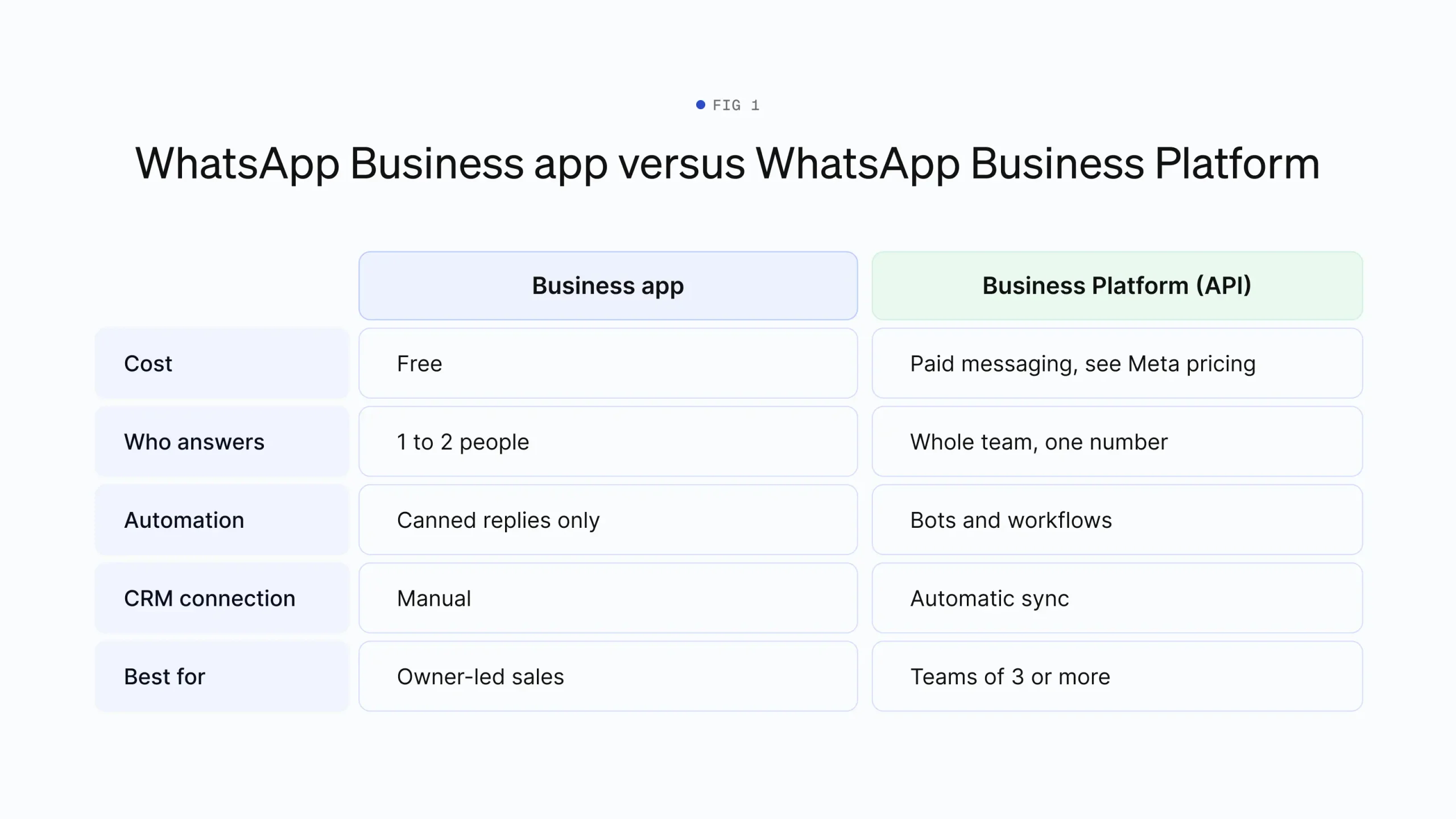
A small company starts with the WhatsApp Business app, not the API. The app is free, runs on a phone, and gives you a business profile with your address and hours, a product catalogue, labels for sorting chats, saved quick replies, and automatic greeting and away messages. One or two people answering enquiries need nothing more. Its limits are the point where you outgrow it: a small number of linked devices, no automation beyond canned messages, and no direct connection to other software.
The WhatsApp Business Platform is the API version for teams. It has no app of its own. You reach it through Meta’s Cloud API or through a Business Solution Provider such as Twilio or 360dialog, or through a CRM that has built WhatsApp in. It supports many agents on one number, automation, chatbots and CRM synchronisation, and Meta charges for certain messages. Meta has changed the pricing model for the platform more than once, so do not budget from a blog post. Read the current pricing page on Meta’s own developer documentation before you commit. The practical rule: move to the platform when more than two people need to answer the same number, or when you need conversations recorded somewhere other than a phone.
Click-to-WhatsApp ads
Click-to-WhatsApp ads are Meta ads whose button opens a chat with you instead of a landing page. You create them in Meta Ads Manager: choose a campaign objective that supports messaging destinations, select WhatsApp as the destination, and connect your WhatsApp number to your Facebook Page. The person who taps the ad lands in a WhatsApp conversation with your business, often with a pre-filled opening question you set in the ad.
The difference from a form is who holds the timing. A form gives you contact details and lets you respond on your own schedule. A chat ad starts a live conversation the moment someone taps. If nobody on your side answers for four hours, the money that bought the tap is spent and the conversation is dead. A second difference: a conversation is not a lead record. Until the person shares their name and company, or you save and label the chat, you have an anonymous phone number. Decide before the campaign runs who answers, within what time, and what details they must collect.
What a WhatsApp enquiry looks like
WhatsApp enquiries are short, informal and fast, and they expect the same back. A typical opening is a fragment: a greeting, a question about price, sometimes a voice note. The person is not writing a considered email and does not want a considered email in reply. They want an answer within the hour during business hours. In markets where the channel is normal, a next-day reply reads as lack of interest, and the buyer has usually messaged two of your competitors in the same sitting. This is part of a wider pattern in which conversational interfaces change the questions buyers ask: questions arrive earlier, smaller and more often than they do by email.
Templates and opt-in
You can reply freely for 24 hours after a customer messages you. After that, only approved templates. On the Business Platform, a customer message opens a 24-hour window in which you can send anything. Outside the window, you may only send message templates that WhatsApp has reviewed and approved, and only to people who have opted in to hear from you. The rules exist because WhatsApp treats the inbox as personal space. They are also why the channel works: open and response rates stay high because businesses cannot flood it. Treat opt-in as a feature to protect, not a hurdle to route around. A company that buys phone number lists and blasts templates gets its number restricted or banned.
Getting conversations into a CRM, and the one-phone problem
The biggest operational risk is a pipeline that lives on one person’s handset. On the app, there is no real CRM integration and export is manual. If enquiries go to a salesperson’s personal number, then when that person leaves, the conversation history, the saved contacts and the relationship with that number all leave too. Two rules prevent this. First, the number belongs to the company, on a company SIM or a platform account, never to an employee. Second, every conversation that becomes a lead gets a CRM entry typed by hand if necessary: name, company, what they asked, what was agreed, next step. On the platform, providers and CRM-native integrations can sync messages automatically, which is the main reason growing teams move up from the app.
Who the channel suits. Companies selling into India, the Gulf, Latin America or South East Asia, and companies anywhere whose buyers are small business owners who live on their phones. It suits considered purchases where the buyer wants a person to answer questions before committing. It does not suit selling to enterprise buyers in northern Europe or North America, where WhatsApp remains a personal channel and a business approach there feels intrusive, or products bought without any conversation at all.
ChatGPT Ads and the new AI advertising surfaces
Buyers now ask AI assistants for vendor shortlists, and advertising is beginning to appear beside those answers. A buyer who would once have searched “payroll software for restaurants” and scanned ten results now asks an assistant the same question and reads a paragraph naming two or three companies. The studio has written about how buyers research vendors through AI chat, and what that changes, and about what zero-click research means for B2B websites. The short version: more of the comparison happens before anyone visits your site.
Be careful about what exists versus what has been announced. At the time of writing, Microsoft carries advertising in Copilot drawing on its existing ads system, Google places ads around its AI-generated search results, Perplexity has run sponsored follow-up questions, and OpenAI has said publicly that it is working on advertising in ChatGPT. Which formats have shipped, in which countries, with what targeting and at what price, changes month to month, and any specific figure written here would be stale before you read it. Before planning spend on any of these surfaces, read the platform’s own advertising documentation and announcements, not commentary about them. This description reflects the position when the guide was last updated.
Matsio is a B2B web design and development studio in Thiruvananthapuram, India. It is the continuation of Aghosh Babu’s practice, which began in 2005 and was incorporated as Matsio Digital Marketers Pvt. Ltd. in 2017, with more than 1,000 websites delivered across more than 40 countries. The studio is asked about WhatsApp enquiries more often than about any other channel, because a large share of its clients sell into markets where a message is the normal way to open a conversation. The harder half of that work is making sure the conversation leaves a record. 85% of the studio’s clients return for further work, measured across every engagement since 2005.
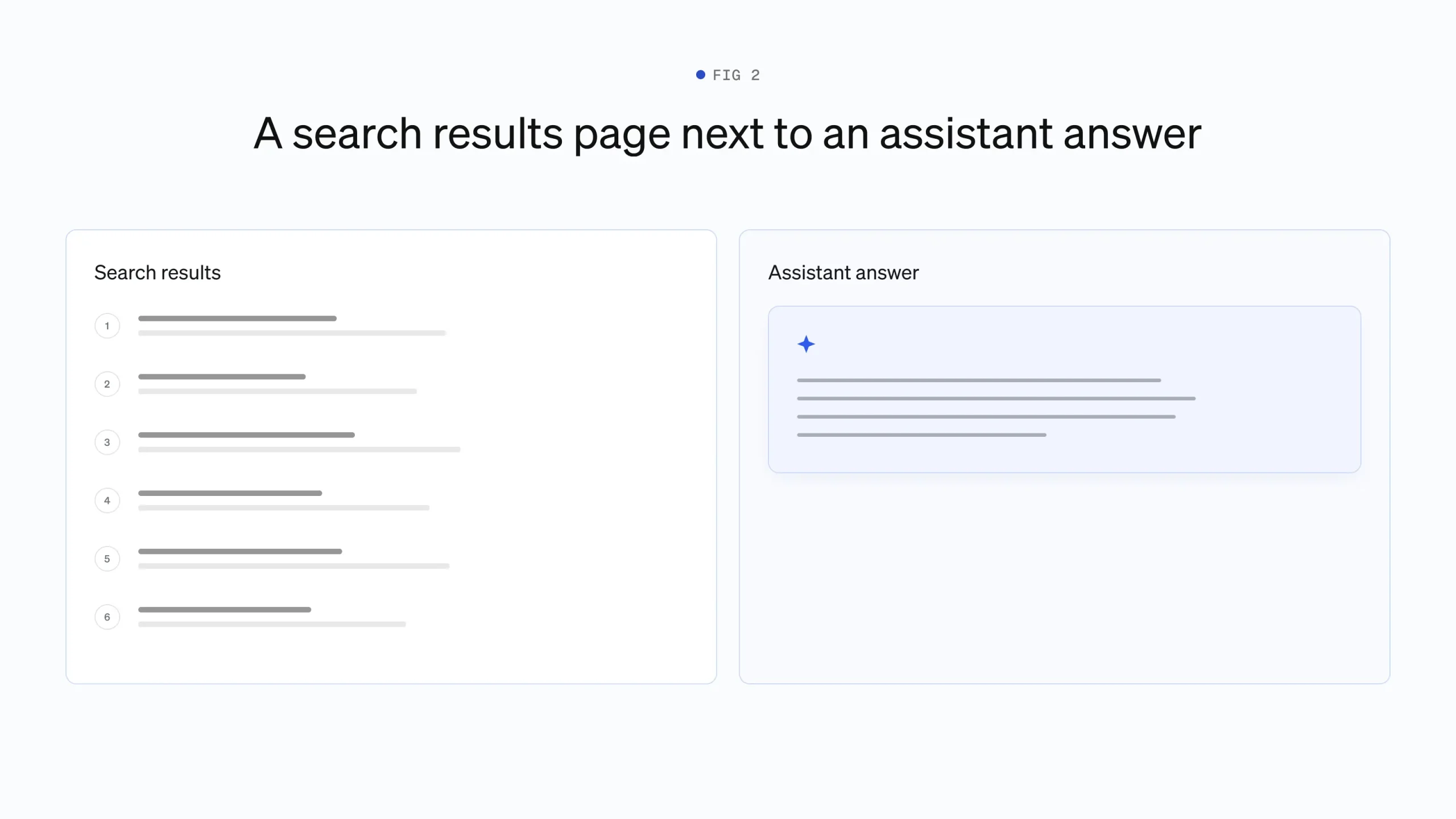
The unit of competition is different from a search ad. A search results page holds ten organic results and several ads, so position eight still exists. An assistant’s answer names two or three companies, and everyone else is absent. There is no page two. The selection is also not an auction over keywords. The assistant retrieves and weighs sources, and the studio has described how answer engines choose which companies to mention: consistent descriptions of what you do, factual pages a model can quote, and third parties that corroborate you.
What a small company can do now is a content and structure problem, not a media buy. You cannot yet buy your way into most assistant answers, and where you can, the ad will be labelled as an ad. The organic part of the answer is assembled from sources, and being one of those sources is open to any company that publishes usable material. That means plain pages that state what you do, for whom, at what price shape, written to be quoted. The studio’s guides on how AI assistants read websites and how structured, factual writing gets cited by AI systems cover the mechanics. A related audience is arriving too: buyers send agents to read sites on their behalf, and what AI agents look for when they visit a website on a buyer’s behalf is close to what a careful human skim-reader looks for, stated facts in predictable places.
Paying for placement and being retrieved on merit are separate games, and the second one is open now. Paid placement in assistants will mature into something like other ad markets: priced, labelled, competitive. Retrieval on merit depends on whether your pages answer the questions buyers put to machines, and that work costs writing time rather than budget. How to write content that answers the questions machines get asked sets out the method. For a small company, this is one of the few places where being small is not a disadvantage, because the assistant does not weigh your ad budget when it assembles an answer.
Smaller channels worth testing
None of the channels below will carry a pipeline on its own, and each fits a narrow set of businesses well. Test one at a time, give it a defined period and a way to count what it produced, and drop it without regret if the count is zero.
Industry directories and marketplaces
Directories suit companies in categories buyers compare, such as software, agencies and contractors. Review sites like G2, Capterra and Clutch, and trade directories in older industries, are where some buyers assemble shortlists. Free listings cost time, paid placement varies by site. Start by claiming the free profile, completing every field, and asking five recent customers for reviews. It fails when you pay for placement in a directory your buyers never open, so ask new customers where they found you before spending.
Reddit and specialist forums
Reddit suits technical and niche products whose buyers distrust marketing. The cost is time over months, not money. Start by reading the rules of each relevant subreddit, then answer questions in your field for several weeks without mentioning your product. When your product is the honest answer to a question, name it and disclose that it is yours. It fails through haste: accounts that post links without history are removed by moderators and filtered by the platform, and the community remembers the company name.
Slack and Discord communities
Private communities suit developer tools and professional niches where practitioners gather. Most are free to join, some charge membership. Start by joining two or three where your buyers are and answering questions under your real name and company. Leads come slowly, through people who saw you be useful. It fails through direct-message pitching, which gets you banned faster than any other behaviour on these platforms.
Niche newsletters
Newsletter sponsorship suits companies whose audience is defined by role or industry rather than geography. Prices scale with list size and are set per issue or per placement, so small lists are affordable to test. Start by asking the writer for a media kit and open rates, sponsor one issue with a distinct URL so you can count visits, and judge after three placements, not one. It fails when the list is large but unread, which is why you ask for open rates first.
Podcast guesting and sponsorship
Guesting suits founders who can talk well about a specialist subject, and it costs time rather than money. Pitch show hosts with a specific episode idea, not a description of yourself. Sponsorship is priced against download numbers and suits products with broad appeal within the show’s niche. Both fail the same way: appearing on shows your buyers do not hear. Choose shows by who listens, not by download totals.
YouTube for demonstrable products
YouTube suits products that show well on a screen: software, machinery, physical processes. A screen recording with clear narration costs an afternoon. Start by recording answers to the ten questions prospects ask on sales calls, and title each video as the question. Videos surface in search for years and are cited by AI assistants. It fails when a company chases subscribers and views instead of answering buyer questions, because entertainment metrics do not produce enquiries.
Quora and Stack Overflow
Question sites suit technical products whose buyers search for answers to specific problems. Stack Overflow’s rules are strict: an answer must answer the question, and promotion without disclosure is removed. Quora tolerates more but rewards the same behaviour. The cost is writing time, and old answers keep surfacing in search results and in AI training and retrieval for years. It fails through link-dropping, which both communities detect and punish.
Regional platforms
Regional platforms suit companies selling into one specific market. Xing has a presence in German-speaking countries, Naver shapes search in South Korea, WeChat is where Chinese business happens, and Line matters in Japan, Thailand and Taiwan. Each platform’s standing shifts over years, so confirm where your buyers are before investing. Entry usually needs native-language content and often a local partner. It fails when a company translates its English site and calls that market entry.
Trade association listings
Associations suit regulated and traditional industries where membership signals legitimacy. The cost is an annual membership fee, which varies by body and company size. Start by asking customers which bodies they check before hiring a supplier, join those, and take the member directory listing and the events that come with it. It fails when a company pays the fee, appears in no directory and attends nothing, which buys a logo and nothing else.
Partner and referral programmes
Referral partnerships suit businesses with natural neighbours: non-competitors who serve the same customer before or after you. An accountant and a commercial lawyer, a web studio and a hosting company, a machinery dealer and a maintenance firm. The cost is a referral fee or a reciprocal arrangement. Start by listing who your customers hire in the six months around hiring you, and approach five of those firms with a specific proposal. It fails when the agreement is a vague “send us people”, with no defined fee, no named contact and no report back on what happened to each referral.
Where AI helps in lead generation, and where it does not
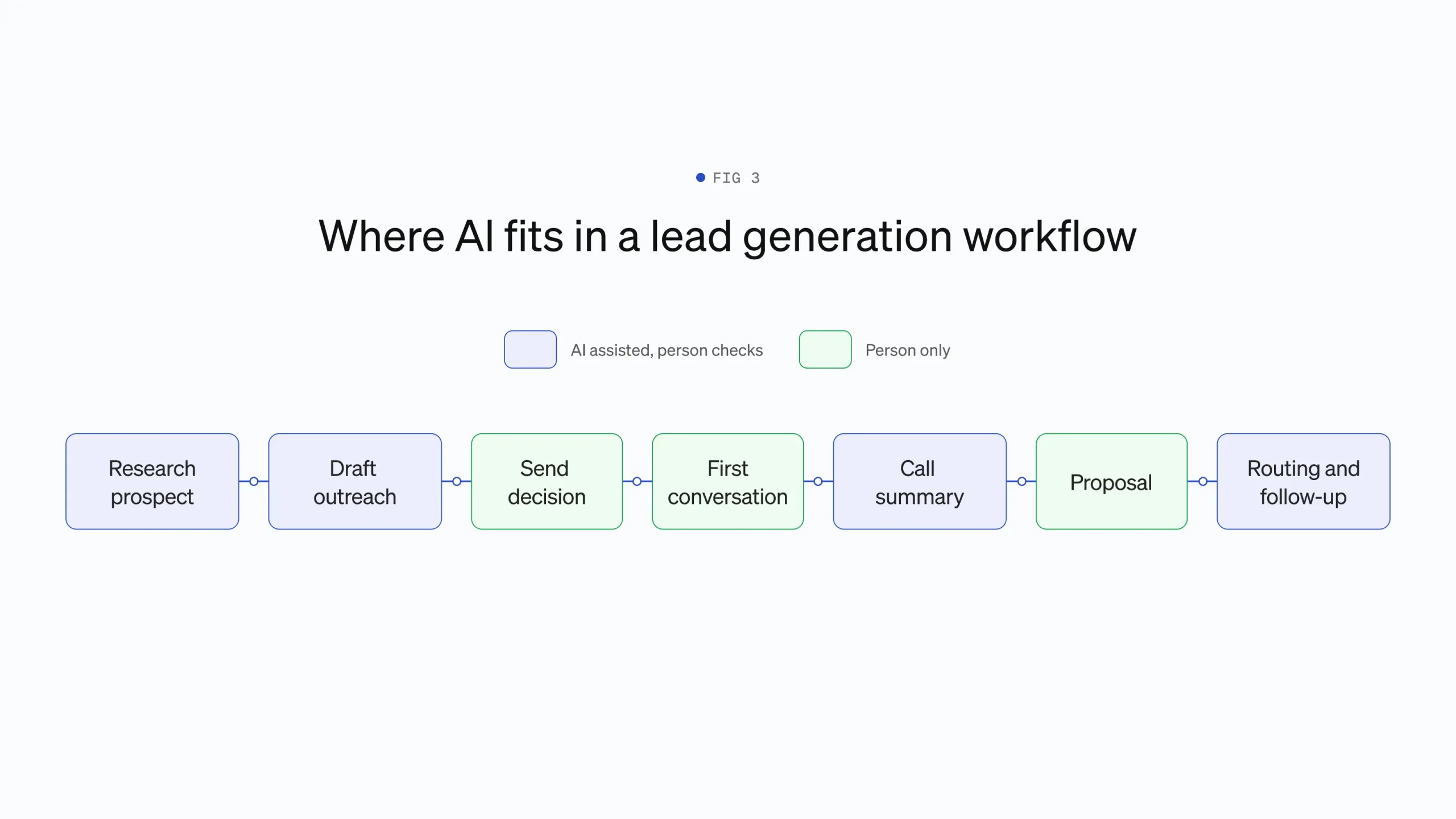
AI tools help most where the task is bounded and a person checks the output, and least where the task is judgement about people. The pattern across every use below is the same: the tool produces volume and speed, and a person supplies the standard the output must meet.
Where it helps: drafting variations. Writing eight versions of an ad headline or a subject line for testing is mechanical work a model does well. A person picks the candidates and the test decides. Research and list building: summarising a prospect’s website, finding the named role you sell to, checking a list against your fit criteria. Verify what it returns, because models state wrong facts with the same confidence as right ones. Summarising calls: meeting notetakers turn a 40-minute call into a CRM entry nobody had to type, which means the CRM gets filled in at all. Classifying and routing enquiries: tagging an incoming message as sales, support or spam and sending it to the right person within minutes. Answering common questions on the site: an assistant grounded on your own documentation can answer the questions your team answers by rote, provided it hands off to a person the moment the question leaves its material. Translating: first drafts into other languages are good, but market-facing copy still needs a native speaker’s review before it ships.
Where it does not help: writing content that ranks or persuades, on its own. A model without a person who knows the subject produces the same generic text your competitors’ models produce, and generic text gives a reader and a search engine no reason to choose it. The studio’s piece on the three things generative engines reward describes what the machine side wants, and all three of them, clarity, consistency and evidence, come from a person who knows the material. Judging which leads are worth pursuing: lead scoring without your own history of which deals closed is guessing with extra steps. The model has no access to the thing that matters, which is what your good customers had in common. Replacing the first conversation: the first call is where you learn what the buyer is trying to do, and it is also where the buyer decides whether you listen. No transcript summary substitutes for having been the one listening.
AI-assisted outbound deserves its own warning. The tools make it cheap to send thousands of personalised-looking emails, and the results of doing so are complaints, spam flags and a damaged sending domain, because volume without judgement about who should receive the message is still spam, whatever wrote it. A hundred emails to researched, well-chosen recipients outperform ten thousand generated ones, and the ten thousand can poison deliverability for the hundred. If a tool’s pitch is volume, the pitch is the problem.
Keep a person doing anything a buyer will read closely or remember. The first conversation, the proposal, pricing decisions, the final check before anything is sent under the company’s name. The studio has written about how to keep human judgment in an AI-assisted marketing stack, and the summary is short: automate the preparation, never the relationship.
Related reading. How to run paid search and paid social for a B2B business covers the two channels most companies start with before reaching for these, and How lead generation works for SaaS and multi-journey businesses covers what happens to channel choice once a company is running several buyer routes at once.
The short version
WhatsApp is a normal business channel in India, the Gulf, Latin America and South East Asia, and it rewards companies that treat it as one. That means replies within the hour during business hours, a number that belongs to the company rather than to an employee, and a CRM entry for every conversation that becomes a lead. One or two people can run it on the free Business app. A team needs the API platform, reached through a provider or a CRM, with pricing checked on Meta’s own documentation rather than on a blog post.
Advertising inside AI assistants is arriving in pieces, and the detail changes month to month. What does not change is the shape of the opportunity: an assistant’s answer has room for a few companies, it selects them from sources rather than from bids, and publishing plain, factual, quotable pages is the work that puts a company in that set. The smaller channels share one rule between them. Each suits a narrow kind of business, so test one at a time, count what it produces over a defined period, and drop it without regret when the count is zero.
AI is worth using on bounded tasks a person checks: drafting variations, researching prospects, summarising calls, routing enquiries. It does not replace the judgement about who to contact, and using it for volume outbound damages the domain that good email depends on. Channel choice is also only one stage of the work. The end-to-end lead generation process sets out the rest, from deciding who you sell to and what your site must say, through the main search and social channels, to tracking and following up the enquiries any channel produces.
A small thing and a big thing
One small thing to fix on your website today, and one big thing to learn that gets you more leads.




 Your information is
safe with us. No spam.
Your information is
safe with us. No spam.